
Christmas in Portugal: the table, the crib and the fire at home
In Portugal, Christmas does not arrive on the twenty-fifth. It happens on the evening of the twenty-fourth: the table is crowded, the cod and cabbage are still steaming, and the crib stands empty, because the baby will only be placed in it on Christmas night. The twenty-fifth is quieter than you might expect: dinner has been eaten, the gifts have been given, and the day belongs to a long lunch and long conversations.
If you want to understand how the Portuguese Christmas works, here is a short map. No gloss, no invented customs: only what repeats year after year, from home to home.
The twenty-fourth: the consoada
The most important evening of the year is called the consoada. The word comes from the Latin consolare, "to comfort": it once meant a small meal after a day of fasting. Today it is a family dinner to which every generation travels, and which runs late into the night.
On the table the main character is bacalhau, salted cod, which the Portuguese cook in a hundred ways. The classic consoada is cod with potatoes, cabbage and boiled eggs, drenched in olive oil. In some regions octopus appears beside it, or instead of it. And the next day the leftover cod becomes roupa velha, "old clothes": cod fried with egg, a dish made from what is left of the feast.
Midnight Mass
After dinner, families go to the Missa do Galo, the "Rooster's Mass": the midnight service with which Christmas properly begins. Some families eat the consoada before Mass and others after it, each home in its own way. During the service the crib is displayed, and at the end everyone comes up in turn to kiss the image of the baby Jesus.
The crib instead of the tree: the presépio
The Christmas tree has long since settled in Portugal, but it is not the heart of the festival. That is the presépio, the Christmas crib: a stable scene with Mary, Joseph, shepherds and animals, to which families add farmers, fishermen and bakers, and where real moss stands in for grass. People usually begin building it after 8 December, the day of the Immaculate Conception. The figures are often handed down from generation to generation, which is perhaps the best part: each one has a story.
The crib has a regional character too. In the town of Alenquer, cribs are set up all over town, and it is known as Vila Presépio, "crib village". In the Alentejo they make the famous Estremoz figures, and in Loulé, in the Algarve, the crib is built in steps. The figure of the baby is placed in the manger on Christmas night.
The sweet half of the year: bolo rei and the rest
By the end of November the windows of the pastelarias, the Portuguese pastry shops, fill with Christmas baking. The star there is bolo rei, the "king cake": round, with a hole in the middle like a crown, topped with candied fruit and nuts. The name refers to the three kings who came to the child, and the cake is eaten from Christmas until 6 January. It has a sister, bolo rainha: more nuts, and no candied fruit.
Beside it on the table: rabanadas, slices of bread soaked in milk and egg, fried and dusted with sugar and cinnamon; filhós, fried dough; arroz doce, rice pudding; aletria, sweet vermicelli with a crust of burnt sugar. The selection depends on the region and the family.
The fire that is lit
If you look for a common denominator in the Portuguese Christmas, it looks like fire. In the central part of the country they still burn the madeiro, a huge Christmas log or bonfire; one of the largest burns in Penamacor.
In a city flat you cannot light a bonfire, and fire comes in another, quieter form: a candle on the table, on a shelf, beside the crib. This is not an ancient custom but a modern reading of it, though the need is the same: that on Christmas night something alive should be burning in the house.
From the twenty-fifth to Kings' Day
The twenty-fifth here is a quiet day: a late start, a long lunch, stuffed turkey on the table in the Lisbon area and in the Alentejo, and roupa velha in the north. Presents are brought by Pai Natal, the Portuguese Santa Claus: they are found under the tree or in shoes by the fireplace. In some families it is said that the baby Jesus himself brings them.
The festival does not end there. Until 6 January, until Dia de Reis, Kings' Day, groups of people go from door to door singing janeiras, songs wishing a good year. The sixth of January closes the season, and with it the last slice of bolo rei is eaten.
A Portuguese Christmas at home: five ideas
- Gather everyone around one table. And let dinner run long. That is the first rule of the consoada.
- Build a small crib. A few figures and a handful of moss are enough. Give it a place where it can be seen.
- Find a bolo rei. Buy one from a good bakery or bake your own, and keep the last slice for 6 January.
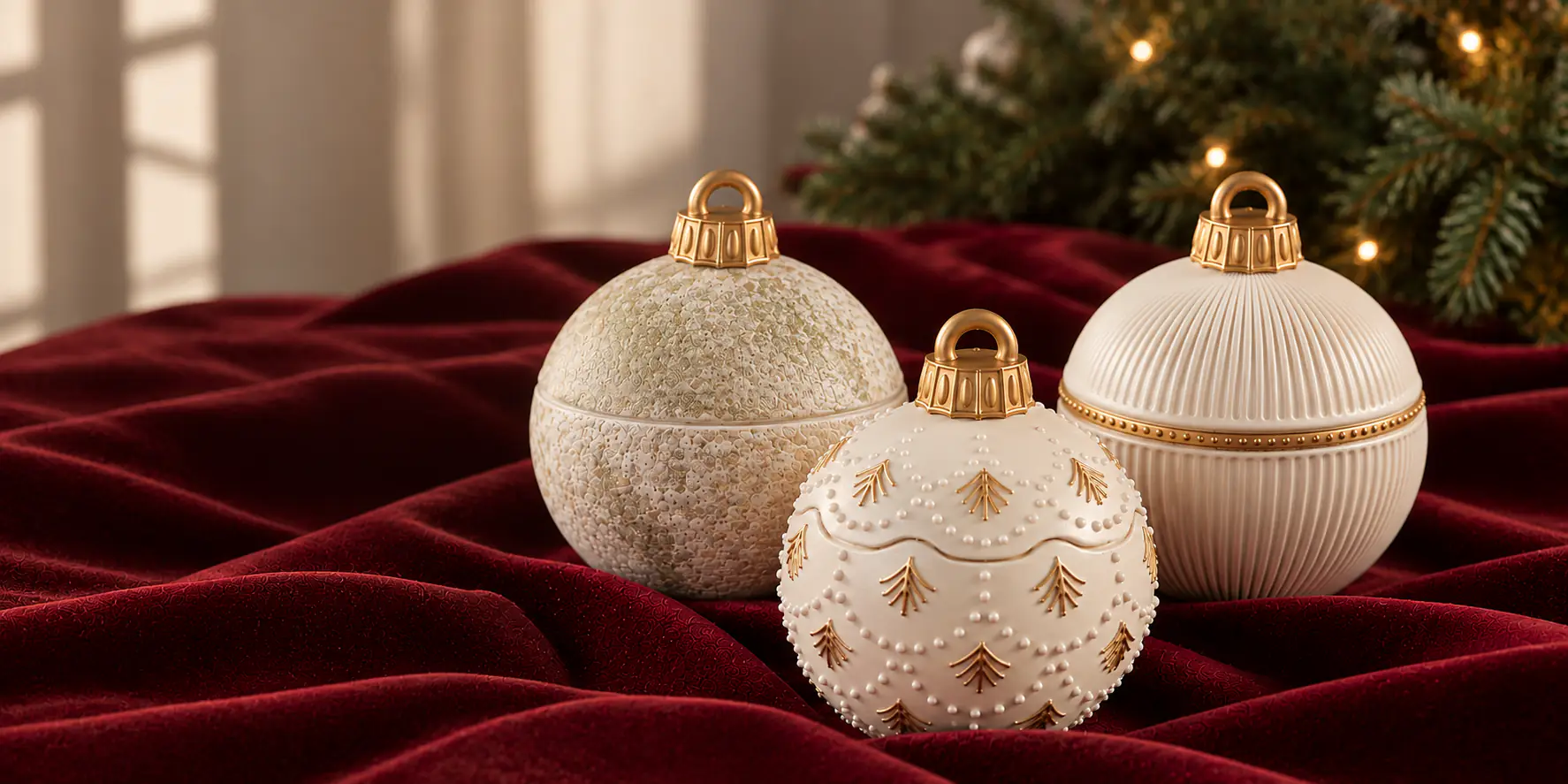
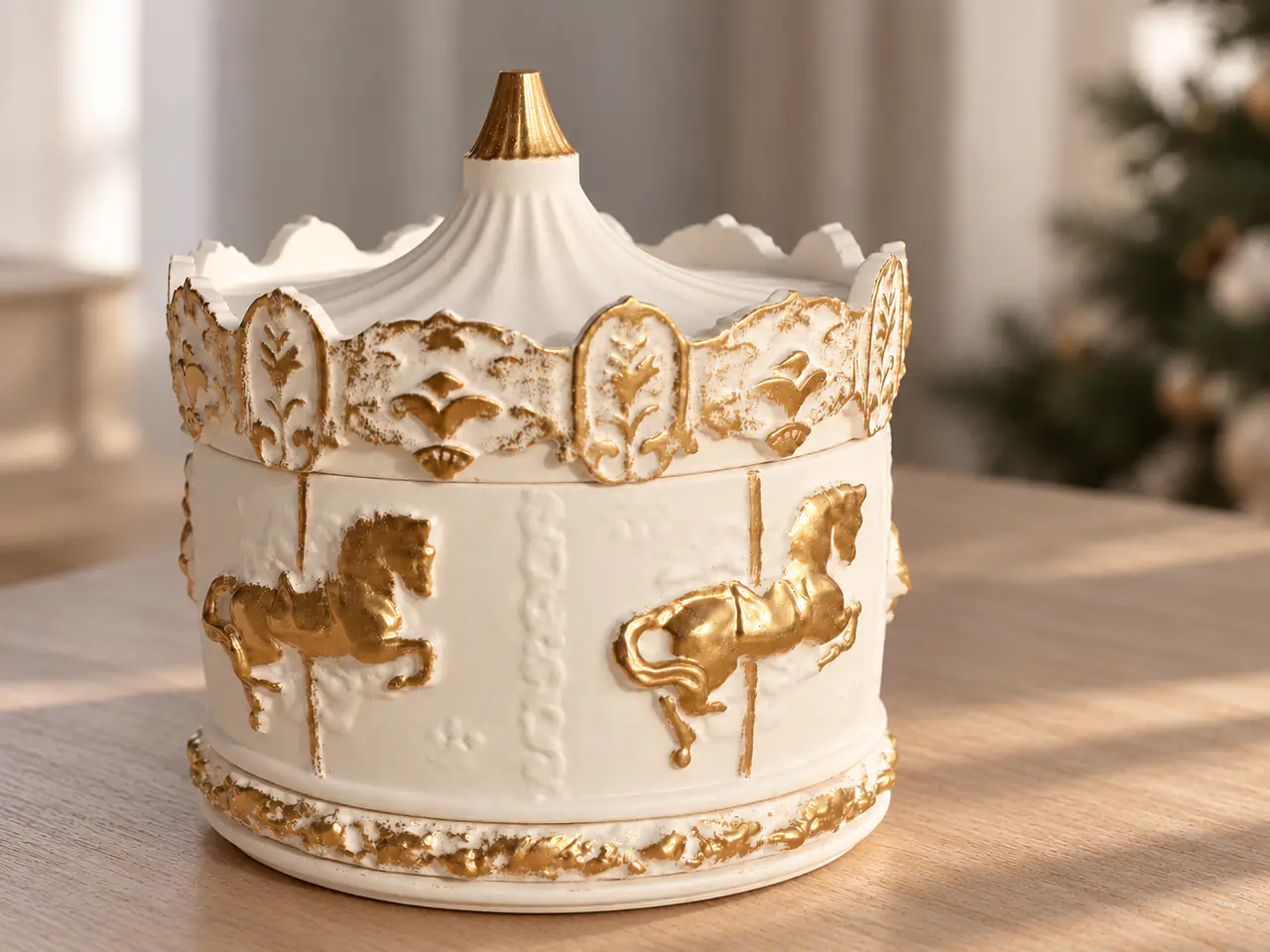
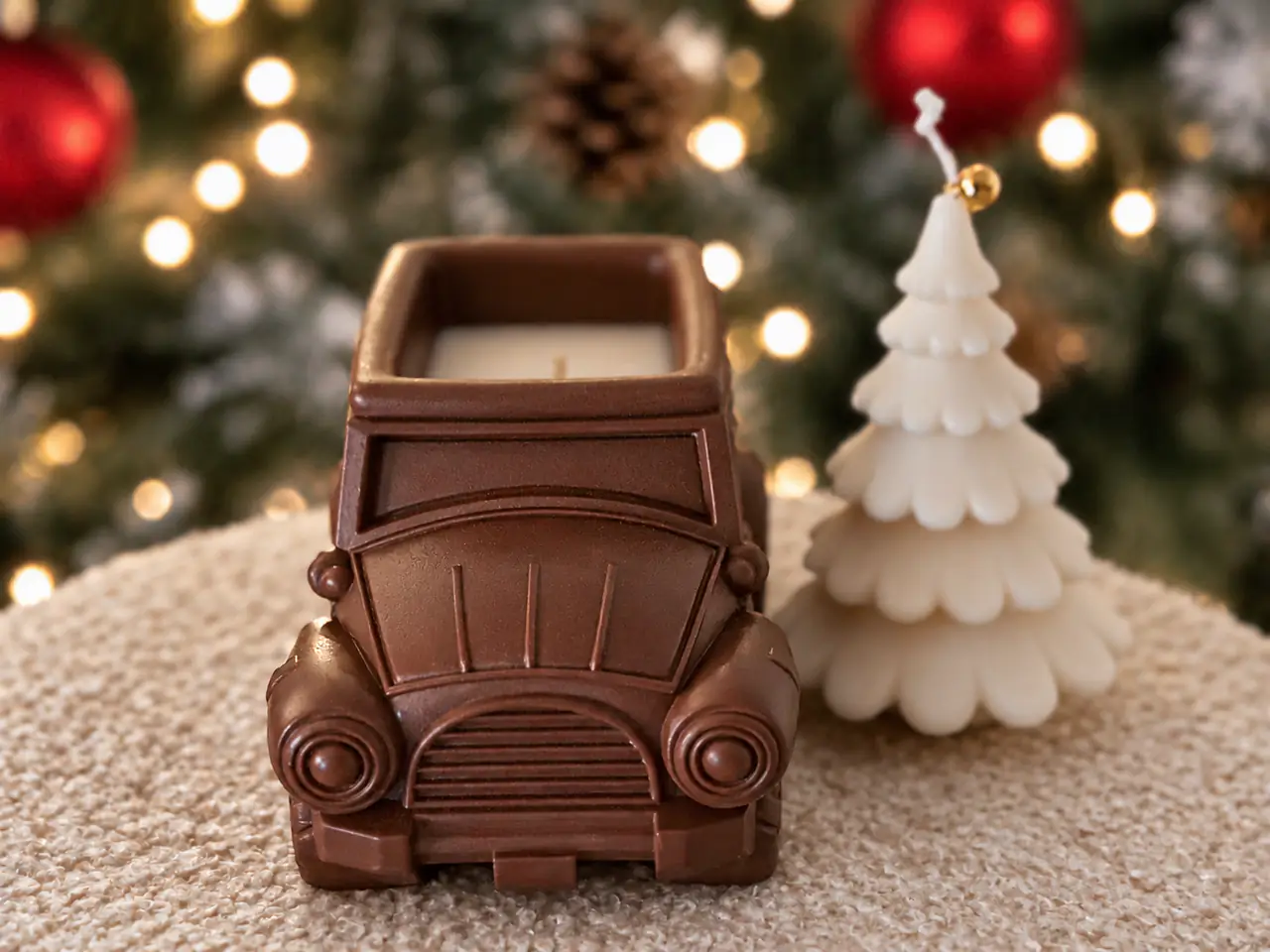
- Give a place to fire. A single candle does more for an evening than ten strings of lights. If you want a piece that outlasts the season, there is Heirloom: a Christmas bauble with a candle and a festive bow, a gift that is kept. For the living room, Carrousel, a Christmas carousel scented with mulled wine, and Homeward, a set about a little car bringing the tree home. And for the hallway, Aureon: a gilded candle-sphere with removable wings, inspired by a legend of Porto.
- Start your own janeiras. Before 6 January, call the people you have not called for a while and wish them a good year.
At Amavela we make candles and sets in Porto, and many of them grow out of Portuguese images. You can see the Christmas collection under Christmas candles, gift ideas are gathered on our page of handmade Christmas gifts, and our guide to Christmas decorating with candles explains how to dress a home with candles without setting anything alight.